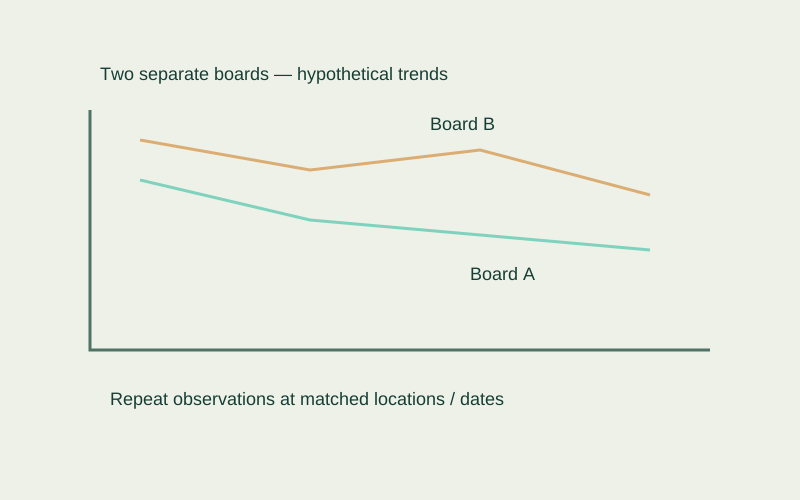
- Keep individual board histories visible; an average can hide a different trajectory.
- Compare readings only with their method, location, conditions and time recorded.
- No measured values or readiness thresholds are implied by these hypothetical trends.
Keep three different quantities separate
Air temperature and relative humidity describe the surrounding air at a recorded place and time. Equilibrium moisture content describes a moisture relationship between wood and an environment at equilibrium. A meter observation concerns the particular material and measurement region examined. These quantities are related, but they are not interchangeable fields in a record. Label each with its units and observation context.
Use equilibrium as context, not a shortcut
Wood exchanges moisture with its surroundings. Its current condition and environmental history matter, so an ambient observation does not establish the present moisture content of a delivered board. An EMC reference can help explain the direction of moisture exchange conceptually. It does not measure the stock, establish how long adjustment will take, or prove that all locations within a board share the same condition.
Know what moisture percent means
Wood moisture content is conventionally expressed relative to oven-dry wood mass. The defining calculation is 100 multiplied by water mass divided by oven-dry wood mass. That definition differs from simply describing water as a fraction of the total wet mass. An electronic instrument infers moisture from a measured property, so the applicable method and settings remain part of the observation. This explanation is not a home oven-testing procedure.
Keep the project requirement attached
The relevant product or project instructions determine how moisture information is used for a decision. Do not turn an ambient reading, a city average, or a theoretical equilibrium value into a universal installation target. Record the requirement separately with its source. This site's observation workflow focuses on the actual stock and its handling history rather than supplying a geographic climate table.
- Record air observations separately from wood observations.
- Identify the source of any equilibrium reference.
- Do not infer a fixed wait period from EMC.
- Keep project requirements distinct from calculated context.
Hypothetical ambient reading beside an unopened bundle
An owner records temperature and relative humidity in a storage area. The bundle has only just arrived, and its boards have not been measured. The worksheet stores the air readings as context and leaves board moisture fields empty. It does not populate them with an equilibrium value or label the bundle adjusted to its new environment.
Common questions
Can relative humidity replace a moisture meter observation?
No. It describes the air, while the meter observation concerns the material examined. Record each for its own purpose.
Does this site calculate EMC or an installation target?
No. It explains the concept and helps organize observations. Use applicable product guidance for requirements; no universal target or adjustment time is supplied.
Evidence & limits
Reviewed September 13, 2026. Sources support their stated technical principles; this site's workflows and hypothetical examples are not product tests, supplier approvals or independently reviewed project records.