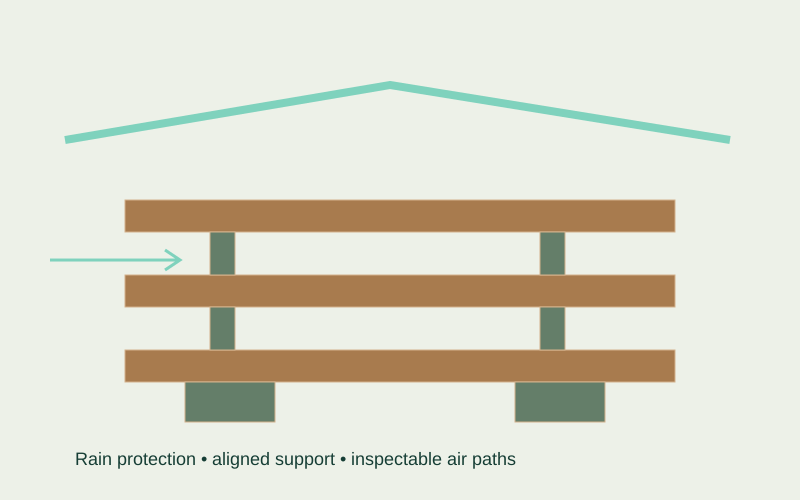
- Protect from direct wetting while preserving appropriate ventilation.
- Keep supports aligned and the stack above the ground on a stable base.
- This is a storage concept, not a universal sticker spacing or acclimation time recommendation.
Replace the climate label with a location record
A coastal address does not tell you whether a bundle sits in an enclosed warehouse, under an open shelter, or beside irrigation. Record the actual setting and the product's storage instructions. If temperature and relative humidity are measured, identify the sensor location and time. This suggested workflow focuses on the conditions around the material rather than assigning a target from a regional label.
Trace the ways liquid water can reach the stack
USDA recommends protecting stock from precipitation and spray. Walk around the storage position and note roof runoff, open sides, splash sources, and observed wetting. Record what is seen rather than assuming every coastal stack has salt exposure or condensation. Where water reaches only part of a bundle, preserve that distinction. A single label such as 'covered' leaves too much unexplained when one side remains exposed.
Review packaging instead of improvising a seal
Follow the supplied directions for wrapping, opening, and stacking the actual product. Do not assume that sealing every bundle tightly or opening every package is an appropriate response to humid air. Ask for clarification when the instructions do not address the storage arrangement. Keep the response with the record so later handlers know why the chosen protection was used and when it should be reviewed.
Retain observations across changing conditions
Use identified boards and documented methods for follow-up. Keep a record of cover changes and observed wetting beside the readings. Moisture exchange depends on the environment and existing condition of the wood; a coastal location alone cannot establish its current state. Review the applicable product requirements rather than interpreting a humid forecast as a countdown or a failed delivery.
- Record affected positions after an exposure event.
- Keep different storage areas separate in summaries.
- Note which parts of the stock remain inaccessible.
Hypothetical waterfront storage bay
A bundle is placed beneath a shelter near the coast. During a site walk, the receiver sees roof runoff wetting the ground beside its eastern end but observes no water on the other side. The record identifies the exposed end, photographs the arrangement, and documents a revised location under the product instructions. It makes no assumption about a special coastal moisture percentage.
Common questions
Does coastal humidity mean the delivery cannot be used?
The location label does not establish the material's condition or suitability. Use product requirements and appropriately documented observations.
Should salt exposure be entered automatically for a coastal site?
No. Record known or observed exposure and its source. Do not convert proximity to the coast into an undocumented event.
Evidence & limits
Reviewed September 13, 2026. Sources support their stated technical principles; this site's workflows and hypothetical examples are not product tests, supplier approvals or independently reviewed project records.