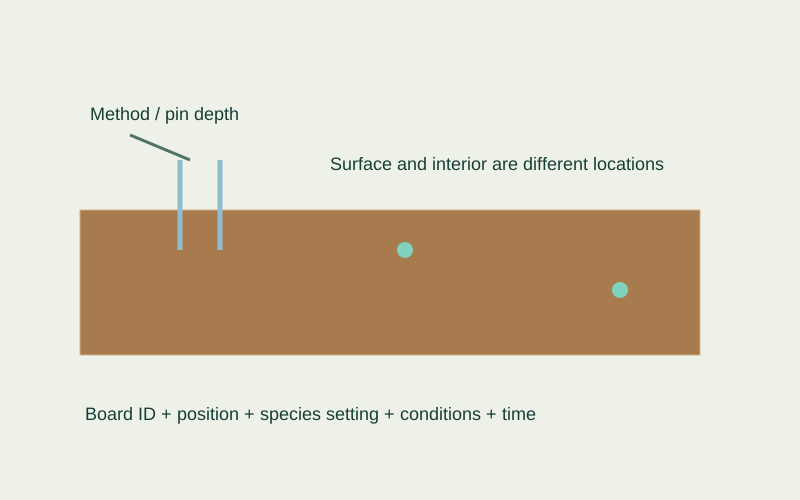
- Record the measurement method and the region it can assess.
- A surface observation does not establish the moisture condition throughout the section.
- Instrument correction and depth must follow the named meter and species documentation; dots are conceptual locations.
Give every observation a location
A date and moisture number are not enough to find the same observation again. Record bundle, board, face, position, and measurement mode. A sketch or photograph with a reference marker can be more useful than a long description. Keep markings compatible with the product and finish requirements. This is a suggested documentation method, not a prescribed test layout.
Record the procedure beside the position
The location record should include the meter model, species setting, sensor mode or electrode arrangement, and corrections used. Follow the model instructions for placement and orientation. Where repeated measurement at an exact point is unsuitable, follow the applicable procedure and document how the follow-up location was selected. Avoid implying identical sampling merely because the same board was used.
Separate matched and new observations
A matched record returns to an identified board and a sufficiently comparable documented method. A reading on a newly accessible board adds useful coverage, but it is not the later value for an older board. Keep these two purposes separate in the log. That lets a reviewer distinguish changes over time from differences among pieces of stock.
- Preserve stable board identifiers across sessions.
- Flag moved, cut, replaced, or newly exposed boards.
- Record equipment and setting changes.
- Do not reuse an old identifier for different stock.
Keep environmental context concise
Note changes that help interpret the session, such as relocation, cover changes, visible wetting, or a different measurement procedure. Ambient temperature and relative humidity, if recorded, need their own time and location. They describe the observation environment and should not be placed in the board-moisture field. The goal is a compact explanation of what changed, not an unstructured diary that obscures the readings.
Hypothetical follow-up after a stack moves
Board A-03 was originally observed on its marked upper face. After the stack is relocated, that face is inaccessible and a different face is measured. The log retains A-03 but marks the new face and the relocation. The software shows two observations with different positions rather than automatically presenting their difference as a matched drying trend.
Common questions
Is the same board enough to make two readings comparable?
It helps, but position, method, settings, and conditions also matter. Record those details before interpreting a numerical change.
What if a board is cut or installed between sessions?
Keep its history and note the change. Do not assume the new observation describes the same sampling conditions as the original one.
Evidence & limits
Reviewed September 13, 2026. Sources support their stated technical principles; this site's workflows and hypothetical examples are not product tests, supplier approvals or independently reviewed project records.