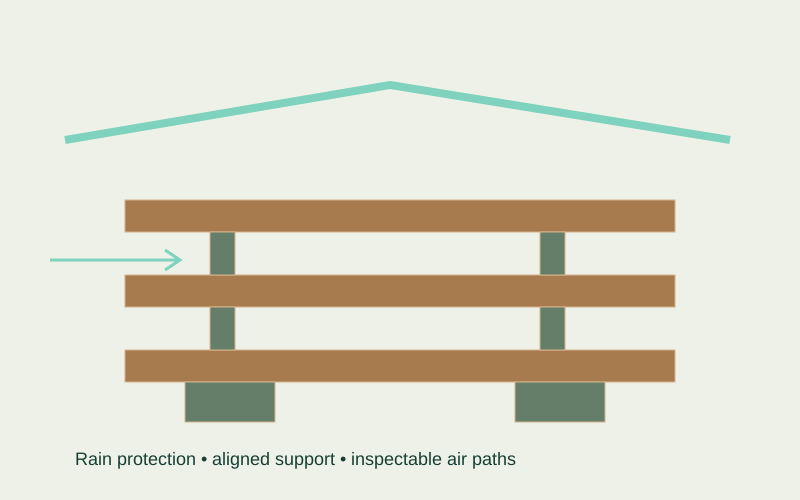
- Protect from direct wetting while preserving appropriate ventilation.
- Keep supports aligned and the stack above the ground on a stable base.
- This is a storage concept, not a universal sticker spacing or acclimation time recommendation.
Preserve the label and ask what it specifies
AD and KD commonly identify air-dried and kiln-dried stock. Record the exact label and accompanying product information rather than adding an assumed moisture percentage. If the order specifies a moisture condition, save that requirement and its scope separately. A drying-process description and a contractual delivery requirement answer different questions, even when both appear on the same paperwork.
Drying history does not freeze the material's condition
USDA describes changes that can occur while wood is in transit or storage after drying. Consequently, a past process label does not establish every board's condition at receipt. The useful receiving question is what was specified, what arrived, and how it can be appropriately observed. Avoid assuming that kiln drying eliminates later moisture exchange or that air drying automatically makes stock unsuitable for its intended application.
Organize the receiving check around the actual stock
Retain bundle identities, packaging observations, and any known exposure history. Use an appropriate meter procedure with model, species setting, and locations recorded. Keep AD and KD groups identifiable if both occur in one delivery; do not merge their histories into a single unexplained average. Record inaccessible material and unresolved documentation so a reviewer can see the limits of the receiving evidence.
Connect the next step to the product requirement
Compare observations with the applicable instructions or agreed specification, and obtain clarification where its meaning is uncertain. Do not substitute a generic AD or KD target found elsewhere. Any storage or further assessment should be chosen for the actual product and condition. This proposed receiving workflow documents the decision inputs; it does not award readiness status from the label, an average, or the calendar.
- Keep the process label separate from the specified requirement.
- Retain arrival observations before subsequent storage changes.
- Identify who supplied any clarification and when.
Hypothetical order with two drying descriptions
An order includes one bundle labeled AD and another labeled KD, but the paperwork gives no project-specific moisture requirement. The receiver records both descriptions, keeps their observations separate, and asks for the relevant handling and delivery criteria. Neither group is automatically accepted or rejected. The later response is attached without rewriting the original labels or inventing an assumed percentage.
Common questions
Does KD mean the boards are ready to install immediately?
The label alone does not establish current condition or compliance with the intended application's requirements. Review the delivered stock and applicable instructions.
Is AD always wetter than KD at delivery?
Do not infer the actual delivered condition from those labels alone. The specific drying outcome and subsequent handling history matter; appropriate observations address the current stock.
Evidence & limits
Reviewed September 13, 2026. Sources support their stated technical principles; this site's workflows and hypothetical examples are not product tests, supplier approvals or independently reviewed project records.