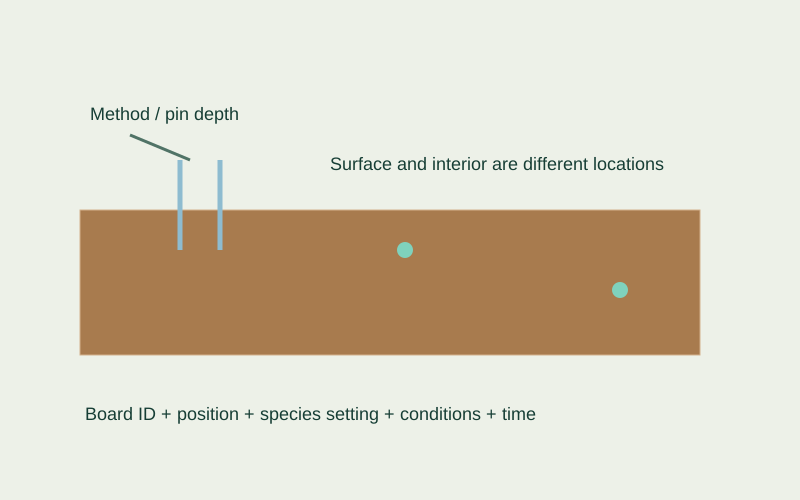
- Record the measurement method and the region it can assess.
- A surface observation does not establish the moisture condition throughout the section.
- Instrument correction and depth must follow the named meter and species documentation; dots are conceptual locations.
Give the delivery an identity
Start with the purchase reference, delivery date, product description, and the supplier's lot or bundle labels. Photograph labels before unpacking makes them difficult to find. Assign your own short bundle names where necessary and retain the connection to the original paperwork. This is a suggested recordkeeping workflow, not a formal acceptance standard. Its purpose is to let a later reader identify exactly which material an observation describes.
- Record the stated species and product rather than guessing from appearance.
- Keep bundles with different labels or delivery conditions identifiable.
- Save the applicable product handling instructions with the delivery record.
Separate visible condition from measurement
Describe torn wrapping, standing water, wet-looking faces, stains, or damaged supports as observations. A photograph of a dark patch does not establish its cause or moisture content. Similarly, an electronic reading is not a complete condition inspection. Keep the photographs, visual notes, and meter readings in separate fields so that one does not become an unsupported explanation for another. USDA guidance recommends determining moisture content when stock is received and protecting it from precipitation and spray.
Make the first readings reproducible
Record the meter model, measurement mode, species setting, board identity, position, and time. Follow that instrument's instructions for contact, orientation, thickness, and corrections. Note which parts of the delivery were accessible. An outer-board observation should remain labeled as an outer-board observation. If a supplier specification is available, attach its exact wording and source; do not replace missing requirements with a number found in a general article.
Record the next destination
Finish with the storage location, any handling changes, and questions needing an answer. Identify who will resolve a discrepancy and preserve the original entry when new information arrives. This prevents a useful receiving record from becoming a disconnected set of photographs. It also makes a later storage change visible when someone reviews the moisture observations.
Hypothetical delivery: two different conditions
Bundles A and B arrive together. A has intact wrapping; B has a torn corner and visibly wetted boards beneath it. The receiver creates separate records, photographs B's corner, and labels every sampled board by bundle. The report says that B's interior was inaccessible. It does not describe the whole delivery as dry or assign a recovery period.
Common questions
Does intact wrapping prove the wood meets the project requirement?
No. Wrapping condition is useful context, but it does not substitute for the applicable requirement and appropriate measurements.
Should I overwrite an initial entry when a supplier clarifies the species?
Keep the initial entry and add the clarification with its date and source. That preserves the explanation for any setting changes between sessions.
Evidence & limits
Reviewed September 13, 2026. Sources support their stated technical principles; this site's workflows and hypothetical examples are not product tests, supplier approvals or independently reviewed project records.