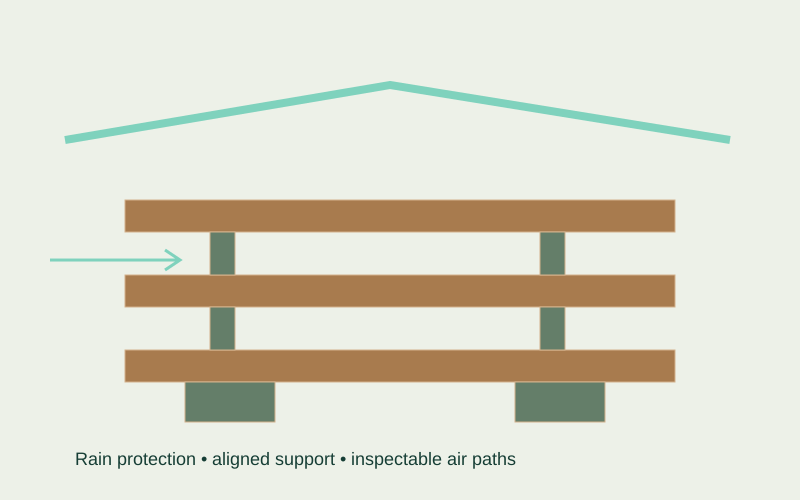
- Protect from direct wetting while preserving appropriate ventilation.
- Keep supports aligned and the stack above the ground on a stable base.
- This is a storage concept, not a universal sticker spacing or acclimation time recommendation.
Identify the destination, not just the address
An enclosed room with operating environmental controls and an exterior deck at the same property are different destinations. Write down the intended use before choosing a storage location. Include whether the space is enclosed, whether its normal systems are operating, and whether the material will remain exposed outdoors. This proposed destination record helps prevent a procedure for an interior product from being transferred to exterior stock without checking its applicability.
A temporary room may not represent service conditions
Construction-stage conditions can differ from the eventual occupied space. Record unfinished wet work, open walls, temporary heating, and changes to ventilation as factual context. USDA discusses moisture control during construction and distinguishes product uses. Avoid describing a room as conditioned merely because it has a thermostat. What matters to your record is the observed condition and the applicable product requirement, including whether the normal operating environment has actually been established.
Exterior storage needs its own exposure description
A covered porch, enclosed garage, and open yard should have separate location names in the log. Document where precipitation or spray reaches the stock and how product-specific protection is arranged. Ambient observations belong to the place where they were taken. A reading inside the house does not describe the air around an exterior stack, and neither air reading establishes the boards' current moisture content.
Compare the procedure with the intended use
Attach the relevant handling instructions and flag any uncertainty about whether they cover the planned application. Maintain separate records when one delivery supplies both interior and exterior work. The same supplier name or species does not make their destination requirements interchangeable. Record transfers between locations as events, preserving the earlier observations instead of restarting the history.
- Name each storage and service location.
- Separate air observations from board observations.
- Identify the instructions used for each product.
Hypothetical shared delivery for two destinations
A homeowner receives material for an enclosed interior feature and an exterior screen. The interior room still has wet construction work underway, while the exterior material will face outdoor conditions. The record separates the two groups and identifies suitable temporary storage under their respective instructions. It does not use a reading from the finished living room as evidence for either stack.
Common questions
Should exterior boards be stored in an air-conditioned room?
Use the actual product instructions and planned application. An available conditioned room is not automatically the correct preparation environment for exterior stock.
Can I apply an interior flooring wait period to decking?
Not without applicable product guidance. This workflow supplies neither a transferable waiting period nor an installation target.
Evidence & limits
Reviewed September 13, 2026. Sources support their stated technical principles; this site's workflows and hypothetical examples are not product tests, supplier approvals or independently reviewed project records.